
Reservoir Biomarkers and Platforms
Identification of biomarkers of the rebound-competent reservoir of HIV that can support the selection and surveillance of candidate “single-shot” cures
Goal
To discern circulating, non-viral biomarkers of the rebound-competent reservoir of HIV to facilitate selection of candidate curative interventions and to enable the creation of tests to both monitor their success and to predict their failure.
Background and Current Landscape
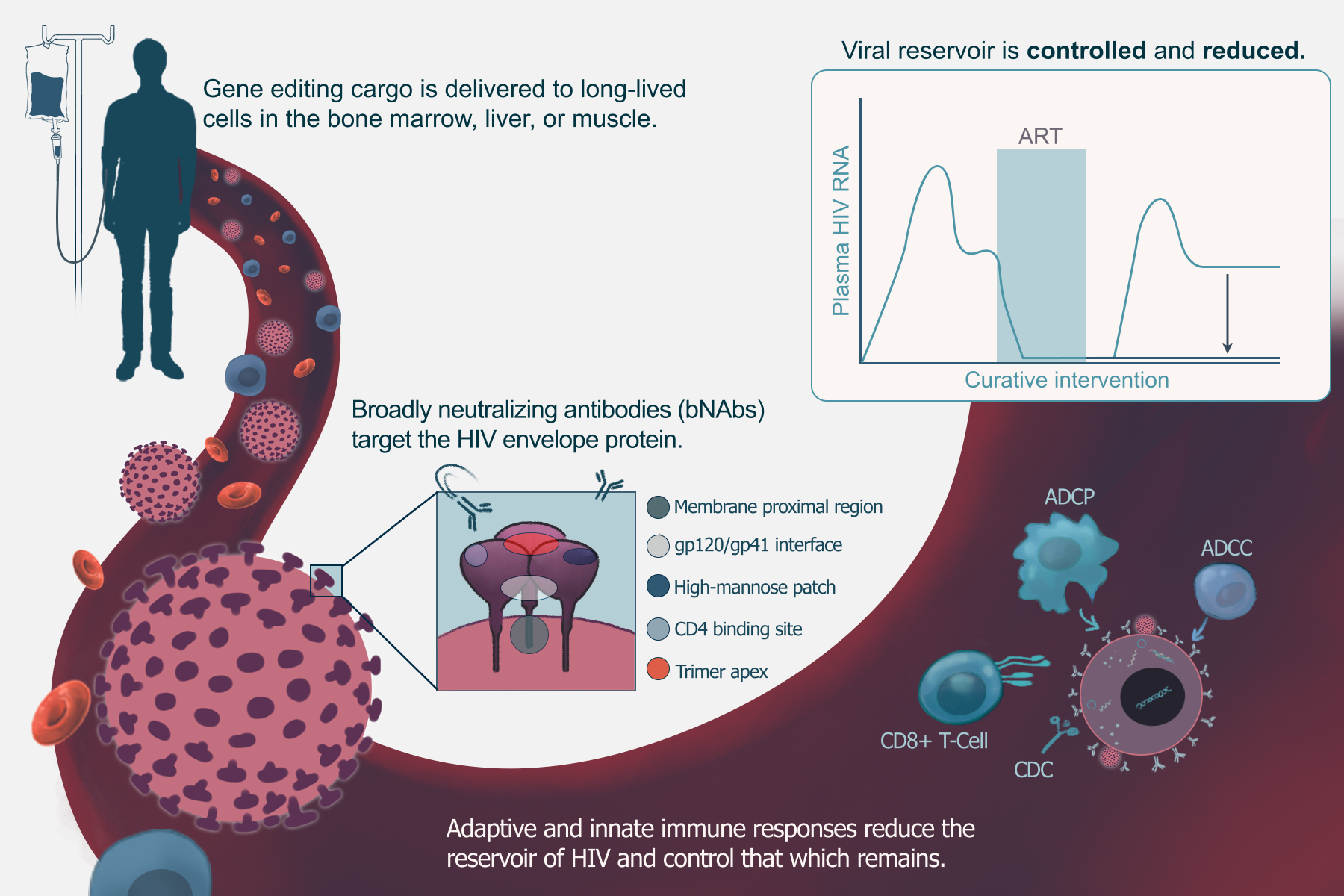
Scientific progress toward a cure for HIV has been hindered by a limited understanding of the biology underlying the rebound-competent viral reservoir. Since cells bearing these full-length viral genomes are difficult to quantify with precision, more investigation is needed to understand how they are sustained and, in limited circumstances, naturally controlled by the immune system.
Studies to date have mostly been limited to a narrow demographic of people living with HIV (PLWH), providing little insight into elements of heterogeneity associated with age, gender, race, or concomitant conditions. A deeper understanding of how the rebound-competent viral reservoir is naturally controlled as well as the ability to measure it and the variables affecting it across different demographics and geographies might enable tailored interventions based on the stage of HIV disease progression. In particular, the identification of circulating biomarkers that predict viral rebound could facilitate the evaluation of interventions designed to induce durable antiretroviral therapy (ART)-free suppression of HIV, enhance the precision of predicting the loss of such suppression, and facilitate the design of affordable detection devices for individual use to monitor HIV viremia over time.
To move this work forward, investments in this subdomain have been established to support the “HIV Reservoirs Consortium”, a five-year effort across a coordinated group of eight teams and an aggregate of more than 50 laboratories across the globe, all focused on the goal of discovering and validating circulating non-viral biomarkers that have value for HIV curative interventions (e.g., from the standpoint of predicting the time to rebound). The leading non-viral biomarker candidates with strong potential for predicting rebound will be advanced through additional investments in biomarker validation, assessment of heterogeneity, clinical trial integration, and platform development.