
Unlocking the Predictive Power of Routine Lab Tests
Foundation-model intelligence built from the world’s most accessible lab data
Goal
To unlock new predictive capabilities from routine laboratory tests by leveraging advanced analytical tools and multidimensional data features, enabling earlier and more actionable detection of health risks across all care settings.
Background and Current Landscape
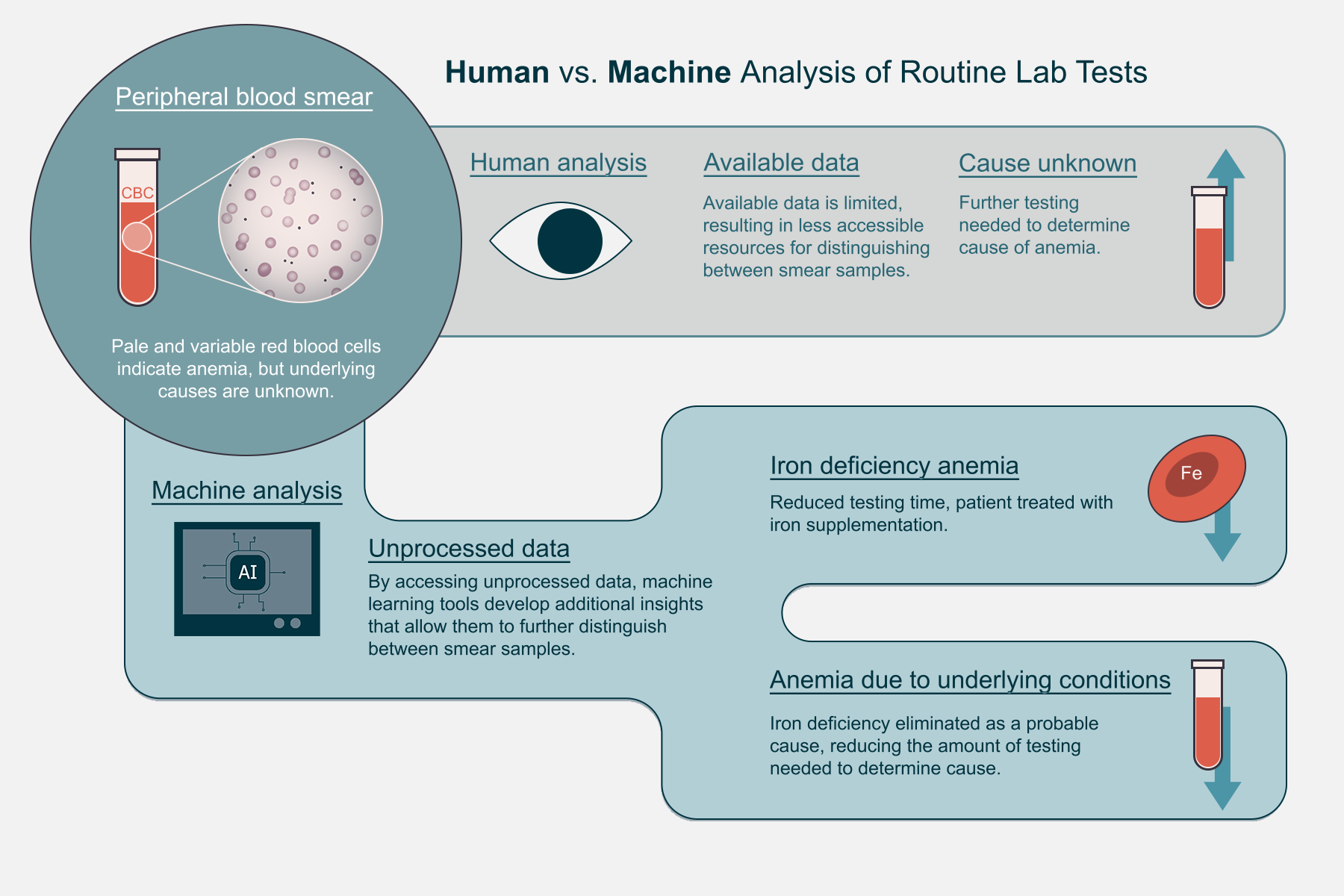
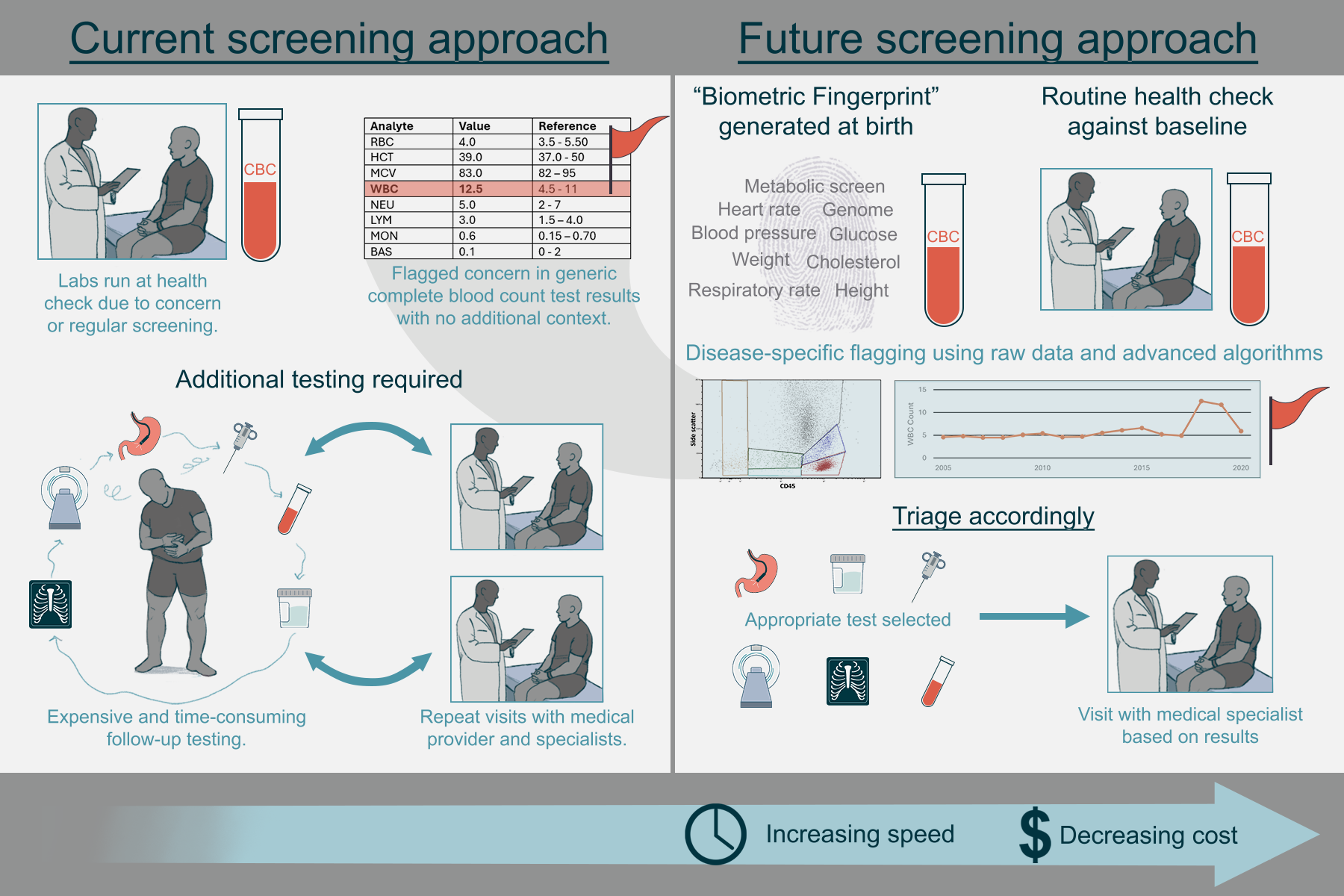
Routine laboratory tests, such as complete blood counts and chemistry panels, are among the most widely collected clinical data worldwide. Despite being inexpensive and deeply embedded in care pathways, they are still interpreted through narrow, threshold-based approaches that capture only a small fraction of their biological signal. This traditional use overlooks the rich, multidimensional information contained not only in the reported values but also in the raw image and numeric data that underlie routine lab outputs.
Advances in computational biology, artificial intelligence, and integrative modeling now enable extraction of deeper biological insight from what were once treated as simple, low-resolution measurements. New analytic tools can detect temporal dynamics, covariation networks, nonlinear relationships, and latent signatures that are invisible to standard interpretation. Across multiple disease areas, early evidence shows that these higher-dimensional features of routine labs can predict deterioration, infection risk, maternal complications, and treatment outcomes well before symptoms appear.
Yet these capabilities remain largely untapped in global health. Progress is hindered by inconsistent data quality, siloed datasets, limited access to population-scale longitudinal records, and the absence of frameworks to validate and translate predictive signatures into practice. The opportunity, however, is significant: routine labs are already generated at massive scale, including in low-resource settings. By unlocking new dimensions of information from these existing data streams, health systems can gain powerful predictive capabilities without the need for new diagnostic infrastructure.
Potential Applications
Pregnancy Risk Tracking
Accelerator’s Applications of Interest
- Early prediction of pre-eclampsia, eclampsia, and preterm labor
- Detection of premature rupture of membranes (PROM)
- Monitoring maternal deterioration during pregnancy
Potential Broader Impacts
- Population-level understanding of healthy versus high-risk pregnancy signatures
- Improved triage and early intervention in prenatal care
- Expanded predictive models for maternal health in low-resource settings
Differentiating Anemia
Accelerator’s Applications of Interest
- Accurately distinguishing iron deficiency anemia from anemia of chronic inflammation (beyond what CBC alone can resolve)
- Identifying early biological signatures that indicate the type of anemia before standard clinical markers diverge
- Informing iron supplementation and other therapeutic decisions based on anemia subtype
Potential Broader Impacts
- More precise global estimates of anemia types, enabling better targeting of interventions
- Safer, more tailored approaches to maternal and population health through correct classification of anemia
- Improved predictive models for anemia driven by nutritional deficiency vs. inflammatory or other physiological conditions
Disease State Differentiation
Accelerator’s Applications of Interest
- Differentiating latent, early, and active malaria infections
- Identifying severe malaria progression
- Detecting co-occurring bacterial infections
Potential Broader Impacts
- Improved surveillance and outbreak detection in low-resource settings
- Enhanced differentiation of malaria from other illnesses
- Better targeting of antimalarial and antibiotic interventions